IP ratings appear on almost every enclosure and luminaire datasheet, and they are easy to misread. A higher number is not always better, and two ratings that look close test very different things. This guide explains the IP code of IEC 60529 digit by digit, adds the IK impact rating that usually travels with it, and shows how to choose. We test IP and IK in our own laboratory in Egypt, so the notes here come from the test bench as well as from the standard.
How to read an IP code
IP stands for "International Protection" (often read as "Ingress Protection"). The first digit is protection against solid objects and dust. The second is protection against water. An X means that characteristic was not tested: IPX4 is tested for water only.
First digit: solids and dust
| Digit | Protected against |
|---|---|
| 0 | No protection |
| 1 | Objects over 50 mm (back of a hand) |
| 2 | Objects over 12.5 mm (a finger) |
| 3 | Objects over 2.5 mm (tools) |
| 4 | Objects over 1 mm (wires) |
| 5 | Dust-protected: some dust may enter, but not enough to affect operation |
| 6 | Dust-tight: no dust enters |
Second digit: water
| Digit | Protected against |
|---|---|
| 0 | No protection |
| 1 | Vertically dripping water |
| 2 | Dripping water with the enclosure tilted up to 15° |
| 3 | Spraying water up to 60° from vertical |
| 4 | Splashing water from any direction |
| 5 | Water jets (6.3 mm nozzle, 12.5 litres per minute) |
| 6 | Powerful water jets (12.5 mm nozzle, 100 litres per minute) |
| 7 | Temporary immersion, up to 1 m for 30 minutes |
| 8 | Continuous immersion, under conditions agreed with the manufacturer |
| 9 | High-pressure, high-temperature water jets |
IP54, IP65, IP66 and IP67 side by side
- IP54: dust-protected and splash-proof. A good rating for indoor industrial switchrooms, workshops and dusty plants with no direct water.
- IP65: dust-tight and protected against water jets. The usual rating for outdoor enclosures, street lights and floodlights in rain.
- IP66: dust-tight and protected against powerful jets. For heavy rain and storms, coastal sites and areas cleaned with hoses.
- IP67: dust-tight and protected against temporary immersion. For equipment that may stand in flood water for a short time.
The IP67 trap
A common mistake is to treat IP67 as "better than IP66". The immersion test for digit 7 and the jet test for digit 6 are different tests. An enclosure that survives 30 minutes under 1 m of still water can still leak under a powerful jet. IEC 60529 says so directly: an enclosure rated 7 or 8 is not assumed to meet 5 or 6 unless it is marked with both, for example IP66/IP67. If your site has both jets and possible flooding, ask for the double marking.
IK ratings: impact protection
IEC 62262 rates resistance to mechanical impact with an IK code. Typical values: IK06 (1 joule), IK07 (2 J), IK08 (5 J), IK09 (10 J) and IK10 (20 J, the energy of a 5 kg mass dropped from 40 cm). Street lights and public-area luminaires are often specified at IK08 or above. Switchboards in public or industrial areas may call for IK10.
IP is lost on site, not in the factory
An enclosure keeps its rating only if it is installed the way it was tested. In our experience the rating is most often lost through:
- Cable entries cut on site without proper glands, or glands of a lower rating than the enclosure
- Unused knock-outs left open
- Door gaskets damaged, painted over or not compressed because the lock is not fully closed
- Drilling the roof of an enclosure for fixings
- Condensation inside sealed outdoor boxes in hot days and cold nights, which a breather or drain solves
Specify the glands with the enclosure, and check them at handover.
Which rating to choose
| Application | Typical rating |
|---|---|
| Indoor switchboard in a clean electrical room | IP31 to IP41 |
| Indoor board in a dusty or industrial area | IP54 |
| Outdoor distribution box, meter or control enclosure | IP65 or IP66 |
| Street lights and floodlights | IP65 or IP66, IK08 or above |
| Wash-down and coastal areas | IP66 |
| Risk of short flooding | IP66/IP67 double-marked |
How SEGA M tests and builds for IP
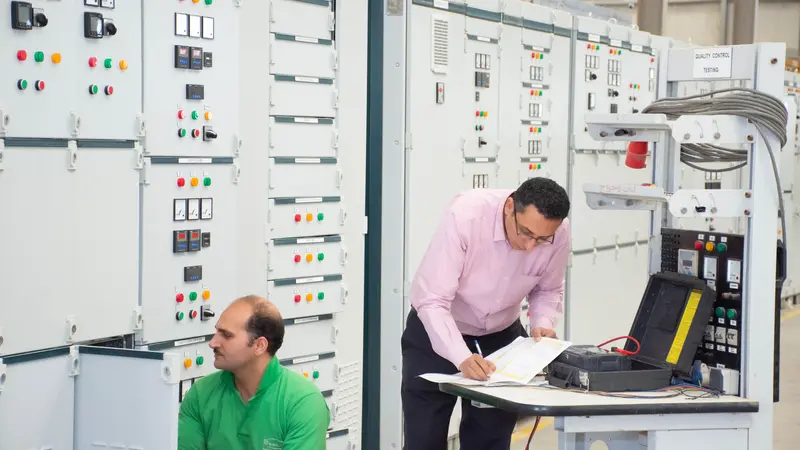
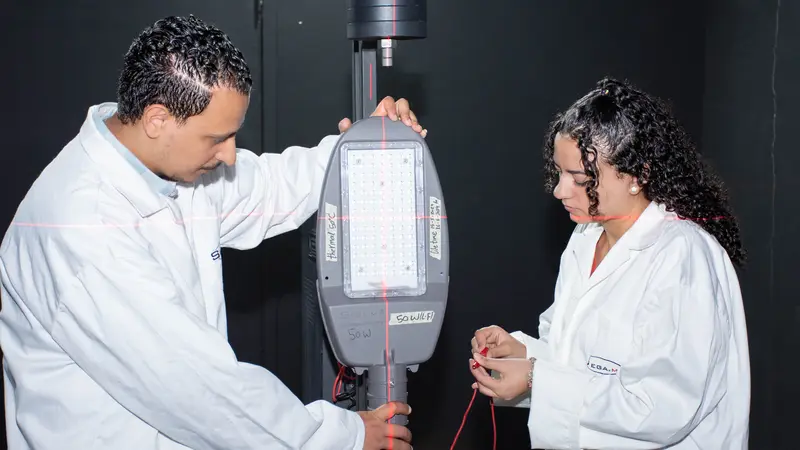
The SEGA M laboratory in 10th of Ramadan City is accredited by EGAC to ISO/IEC 17025 for IP and IK testing, as well as coating thickness and light measurement. We use it to test our own enclosures and luminaires, and we also test products for other manufacturers.
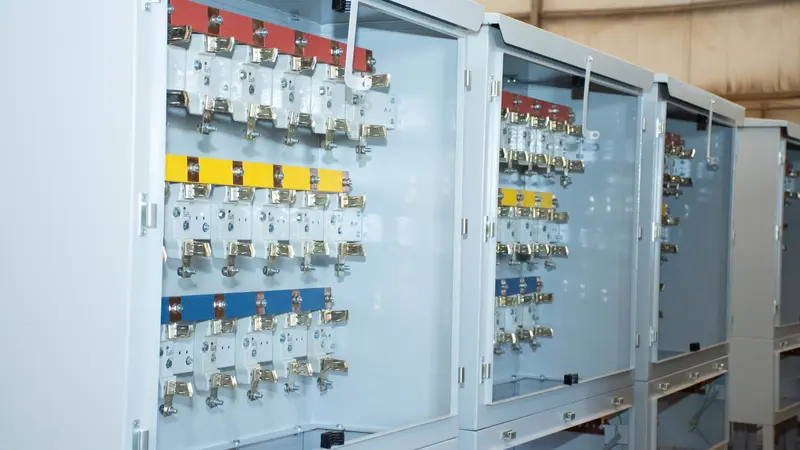
Examples from our range: the SGWM-1 metal enclosures up to IP65 for indoor and outdoor distribution, the modular enclosures at IP54 for control panels, the MFB load centre up to IP65, and the Pacific and Rocky LED street lights at IP65 and IK08. Tell us your site conditions and we will recommend the rating and the glands to go with it.
Frequently asked questions
Is IP67 better than IP66?
Not necessarily. IP67 is tested for temporary immersion and IP66 for powerful water jets. They are different tests. If you need both, ask for IP66/IP67.
What is the difference between IP54 and IP65?
IP54 is dust-protected and resists splashing water. IP65 is fully dust-tight and resists water jets, so it suits outdoor use.
What does IK08 mean?
Resistance to an impact of 5 joules under IEC 62262. It is a common requirement for street lights and outdoor luminaires.
Does SEGA M test IP ratings in-house?
Yes. The SEGA M laboratory is accredited by EGAC to ISO/IEC 17025 for IP and IK testing.