Every factory, hospital, data centre or residential compound fed at medium voltage needs a switchgear line-up between the utility cable and its transformers. For 11 kV and 22 kV networks, the first decision is the insulation technology: air-insulated switchgear (AIS) or gas-insulated switchgear (GIS). Both are proven. They differ in size, cost, maintenance, environmental profile and how easily they can be extended.
The basic difference
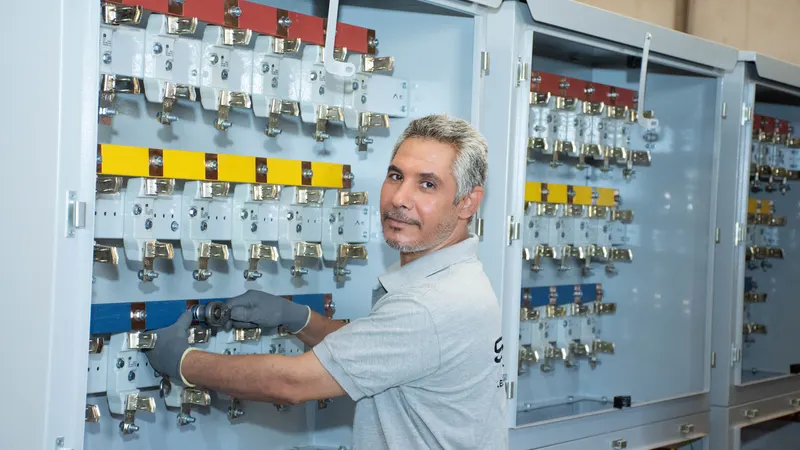
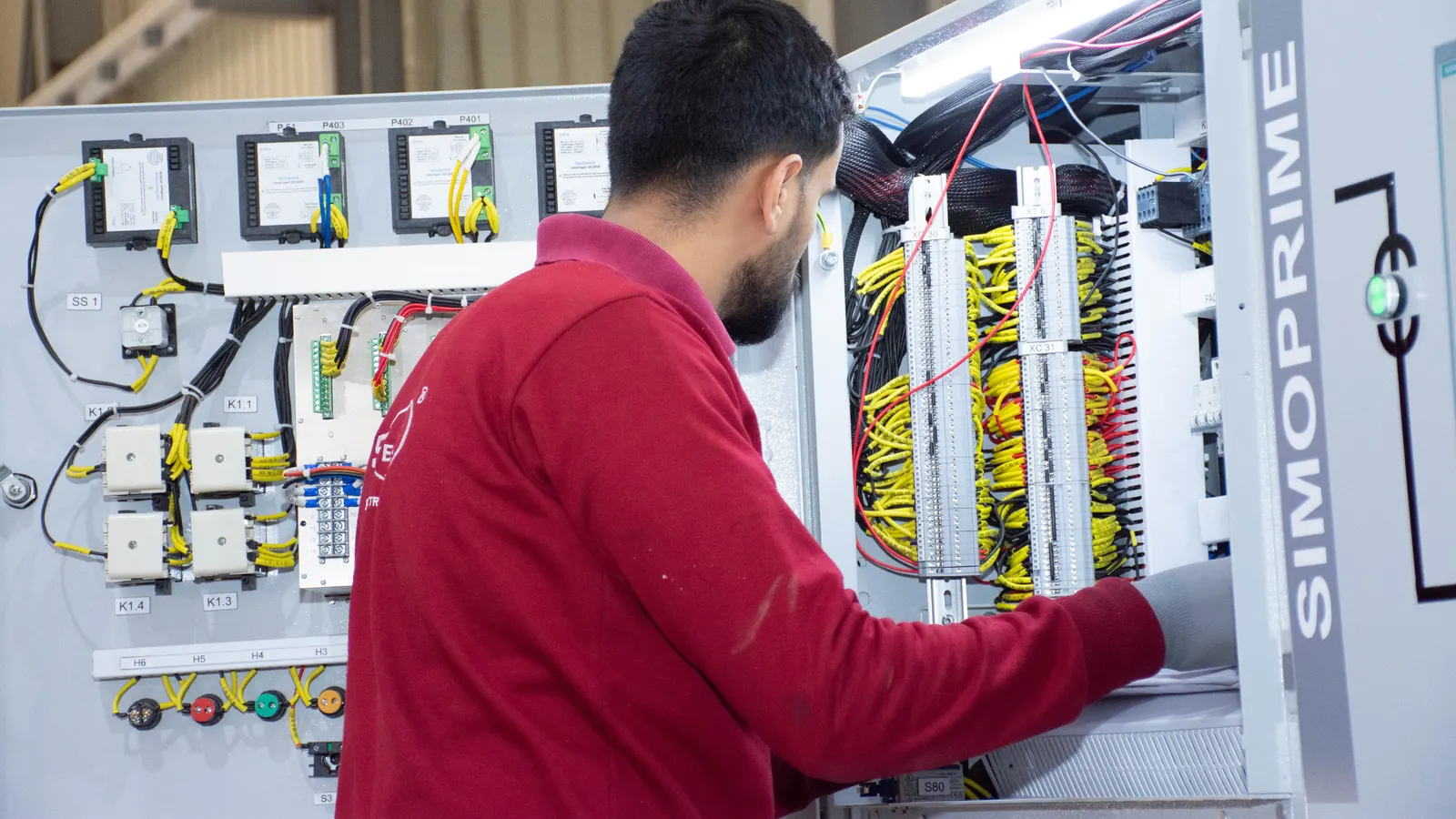
In AIS, the busbars and connections are insulated by air, with enough clearance between live parts and earthed metal. The circuit-breaker is usually a vacuum breaker on a withdrawable truck, so it can be racked out for testing and maintenance.
In GIS, live parts sit inside a sealed metal tank filled with an insulating gas, traditionally SF6, which insulates far better than air. That allows a much smaller panel, at the price of a sealed system that cannot be opened on site.
Side by side
| AIS (air-insulated) | GIS (gas-insulated) | |
|---|---|---|
| Footprint | Larger; panel widths often 600 to 800 mm at 12 to 24 kV | Smaller, often around half the width |
| Initial cost | Usually lower | Usually higher |
| Circuit-breaker | Vacuum, often on a withdrawable truck | Vacuum, fixed inside the gas tank |
| Maintenance access | Breaker can be withdrawn and inspected | Sealed for life; faults inside the tank mean factory repair |
| Insulating gas | None | Usually SF6, a strong greenhouse gas that must be tracked and recovered |
| Extension | Simple to add panels | Possible, but tied to the original system |
| Best where | Normal switchrooms, industry, utilities, where space allows | Very limited space, high pollution or humidity, offshore |
The ratings that matter
- Rated voltage: 12 kV for 11 kV networks, 24 kV for 20 to 22 kV networks.
- Rated normal current: of the busbars and of each feeder.
- Short-time withstand current: for example 25 kA or 31.5 kA for 1 or 3 s, matched to the network fault level.
- Internal arc classification (IAC): under IEC 62271-200, for example "IAC A FLR 25 kA 1 s". It states which sides of the panel are tested for operator safety during an internal arc.
- Loss of service continuity (LSC): LSC2B means other functional units and the cable compartments can stay energised while one compartment is opened.
- Partition class: PM (metallic partitions) or PI (insulating).
How to choose
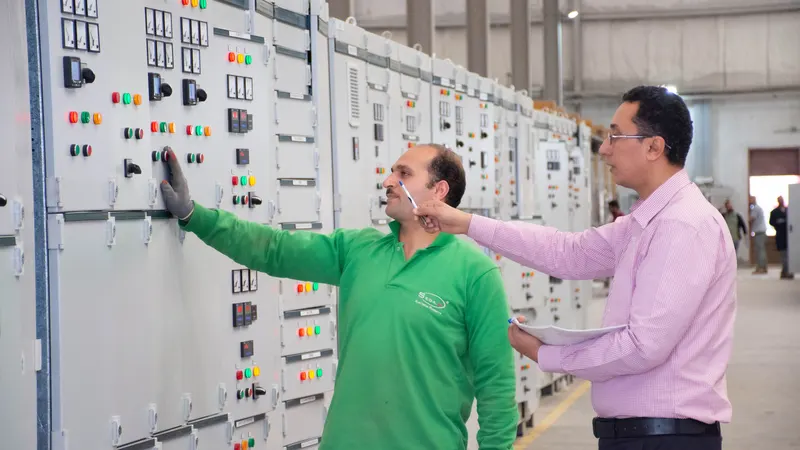
For most industrial plants, utilities and commercial buildings in the Middle East and Africa, AIS with withdrawable vacuum breakers is the practical choice: it costs less, it can be maintained by local teams, and spare panels can be added as the site grows. GIS earns its premium when the switchroom is very small, when the environment is aggressive (salt, dust, humidity) and the room cannot be controlled, or when the owner's standard requires it.
Whichever you choose, specify the internal arc class and the service-continuity category. These two lines in a specification say more about operator safety and uptime than the insulation technology alone.
The SF6 question
SF6 is an excellent insulator but has a global warming potential thousands of times higher than CO2. Several regions are restricting its use in new medium-voltage equipment, and owners increasingly ask for SF6-free designs. AIS with vacuum breakers avoids the issue entirely.
Medium-voltage switchgear from SEGA M
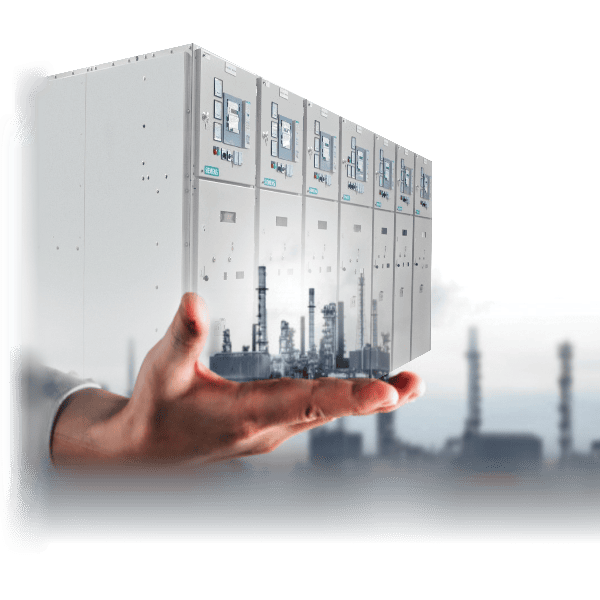
SEGA M builds SIMOPRIME air-insulated, metal-clad switchgear in Egypt as a Siemens Advanced Partner, with vacuum circuit-breakers and no SF6:
- SIMOPRIME 12 kV: busbars up to 3,600 A, internal arc classification up to 40 kA for 1 s (IAC A FLR), LSC2B service continuity, panel widths of 600 to 800 mm, to IEC 62271-200.
- SIMOPRIME A4 24 kV: 25 kA short-time withstand, 2,500 A busbars, withdrawable vacuum breaker truck, 800 mm panel width (500 mm for the 800 A breaker panel), all switching behind the closed high-voltage door.
Send us the single-line diagram, the network fault level and the switchroom layout, and our medium-voltage engineers will propose the line-up.
Frequently asked questions
What is the difference between AIS and GIS switchgear?
AIS insulates live parts with air and is larger but easier to maintain and extend. GIS seals live parts in a gas-filled tank, usually SF6, which makes it much more compact but sealed for life.
Which is cheaper, AIS or GIS?
AIS usually has the lower purchase price at 12 and 24 kV. GIS can be worth its premium when space is very limited or the environment is harsh.
What does LSC2B mean?
It is a loss-of-service-continuity category in IEC 62271-200. In LSC2B switchgear, other units and the cable compartments can stay energised while one compartment is opened for maintenance.
Does SIMOPRIME use SF6?
No. SIMOPRIME is air-insulated and uses vacuum circuit-breakers, so it contains no SF6.